
LogoSurface
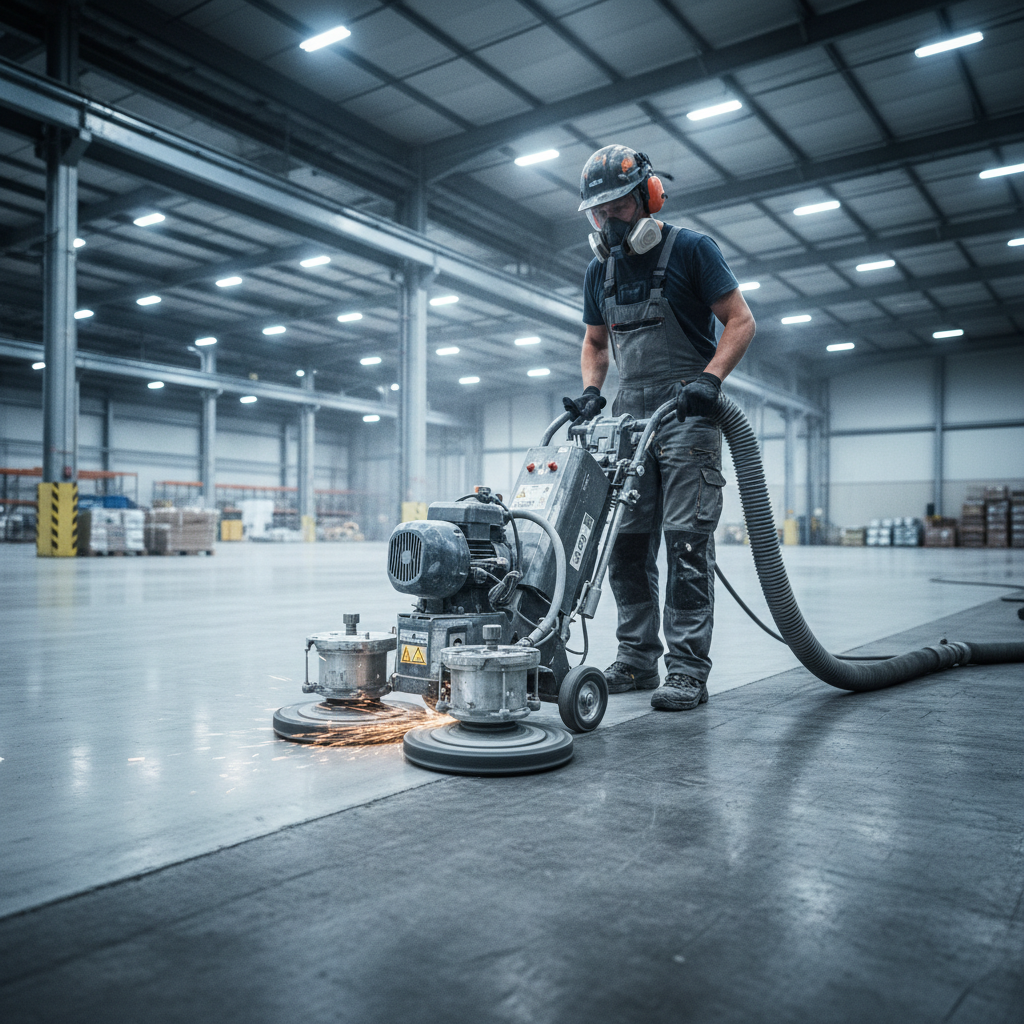
Industrial concrete floor being ground by a planetary grinder, diamond segments sparking against aggregate, operator in full respirator lit by work lights
Active Operations — Commercial & Industrial Finishing
What’s Under
Your Floor Is
Our Entire Business.

Grinding. Polishing. Sealing. Coating. From warehouse epoxy pours to hotel lobby terrazzo — every horizontal plane, treated as a structural specification.

Scroll
Diamond GrindingMoisture Vapor BarrierPolished ConcreteEpoxy BroadcastTerrazzo RestorationMMA CoatingShot BlastingUrethane CementDecorative OverlayCSP ProfilingDiamond GrindingMoisture Vapor BarrierPolished ConcreteEpoxy BroadcastTerrazzo RestorationMMA CoatingShot BlastingUrethane CementDecorative OverlayCSP Profiling
Phase
01
Assessment & Diagnostics

Assess

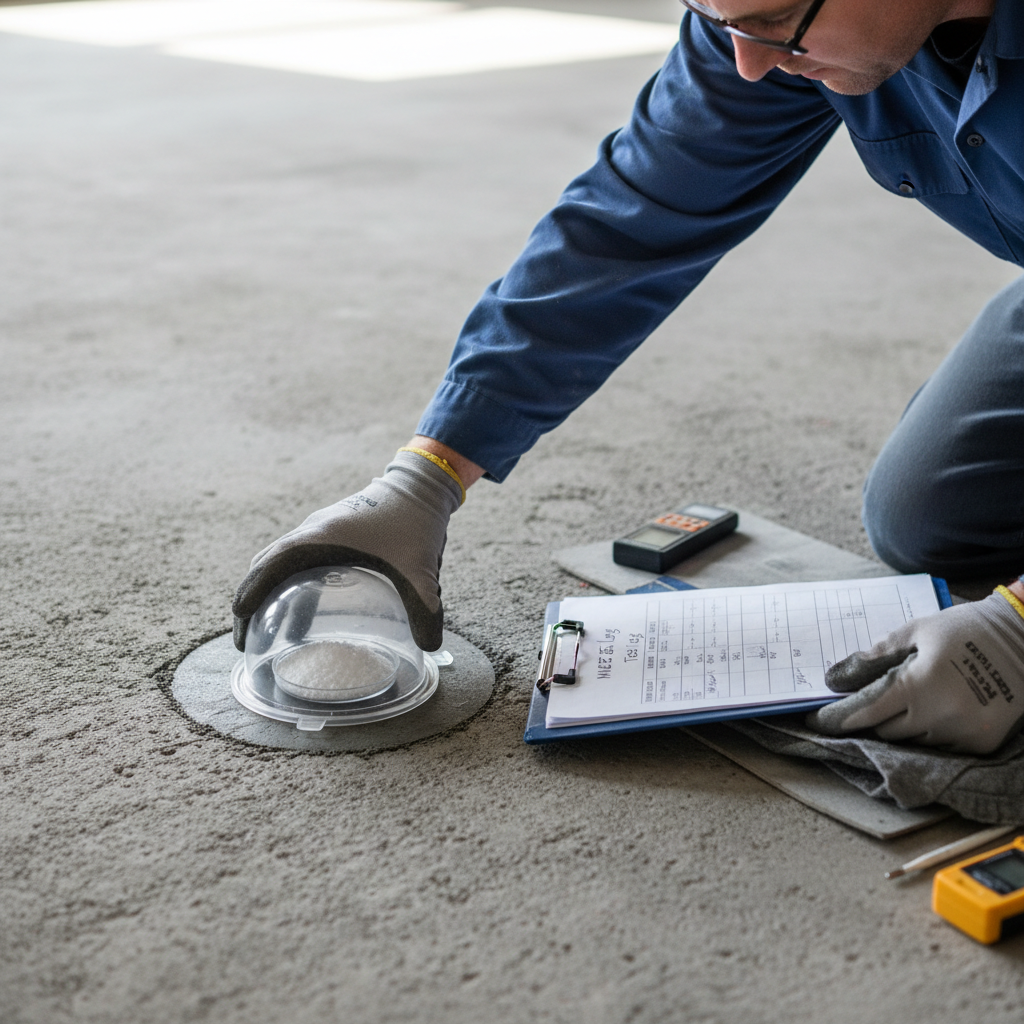
Before a grinder touches the slab, we map it. Moisture vapor emission, crack survey, existing coating adhesion, surface hardness — every reading documented and signed.

Technician performing moisture vapor emission test on concrete slab with calcium chloride dome kit, clipboard with readings visible
Job #CHI-2026-0312
Distribution Center — 84,000 sq ft
Feb 14, 2026
Pre-Bid Assessment
Moisture Vapor Emission
ASTM F1869 Calcium Chloride Test
Limit: 5.0 lbs
Zone A — NE Quadrant
3.8 lbs
Calcium chloride 72hr
Zone B — Center
6.2 lbs
Requires vapor barrier
Zone C — SW Quadrant
2.1 lbs
Within epoxy spec
Zone D — Loading Bay
4.9 lbs
Monitor — at threshold
84K
Sq Ft Mapped
12
Test Points
1 Fail
Zones Flagged
Assessment Output

Every assessment produces a signed PDF report: zone-by-zone MVE readings, crack map overlay on CAD plan, existing coating adhesion pull-off values, and a recommended surface profile (CSP 1–9 per ICRI 310.2). This document travels with the project file and becomes the baseline for warranty coverage.

Phase
02
Surface Preparation

Prep

Profile determines adhesion. We select the grinding method, tooling, and grit sequence based on the assessment data — not habit. Dust containment is HEPA-rated. Profiles are measured and photographed.

Planetary concrete grinder with diamond tooling in operation on warehouse floor, dust extraction hose visible, operator in protective gear
Machine
Husqvarna PG 820
Tooling
30-grit Redi-Lock
Passes
4 (X-pattern)
Dust
HEPA — 99.97%
ICRI 310.2 Surface Profile Reference
Click profile to see specification
Selected: CSP 3
Active Spec — CSP 3

Diamond Grind (30–40 grit) — Typical application: Broadcast epoxy systems. Profile is verified post-grinding with ICRI comparator chips and photographed per section for the project record.

Phase
03
Coating System Selection

Treat

The coating system follows the substrate data — not the budget conversation. Select your application type below to see the full specification stack.

Filter by your role:
Full Specification — Solid-Color Epoxy
Dry Film Thickness
10–15 mil DFT
Required Profile
CSP 3–4
MVE Limit
< 5.0 lbs
Cure Schedule
24 hr light / 72 hr full
Application Stack
1
Primer coat (3 mil)
2
Body coat (7–10 mil)
3
Topcoat (2 mil)
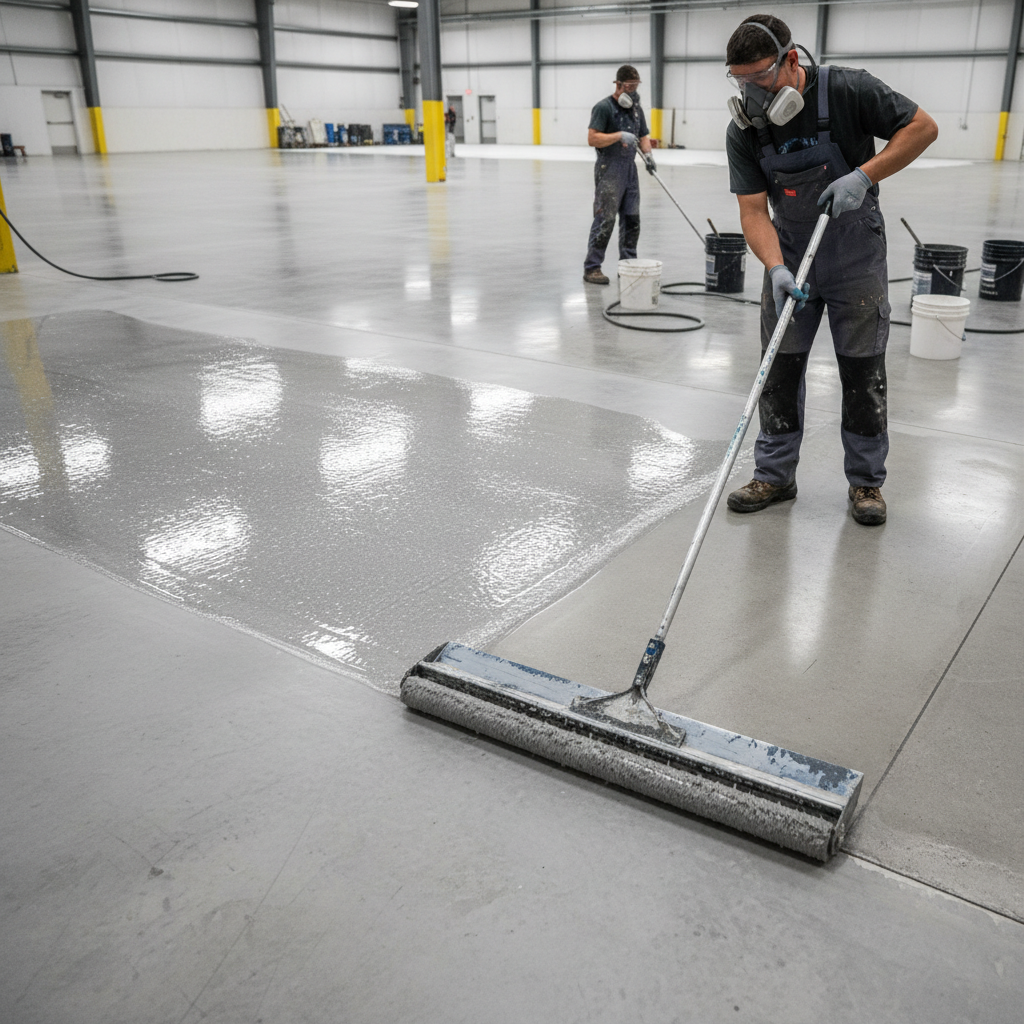
Epoxy coating being rolled onto prepared concrete floor, showing wet film application with roller and notched squeegee
Active Application
Epoxy Broadcast — 62,000 sq ft
Job #MIL-2026-0118 — Milwaukee Distribution
Phase
04
Cure Monitoring & QC

Cure

Cure is not waiting — it’s monitoring. Temperature, humidity, and film thickness are logged every 4 hours. Deviations get flagged before they become failures.

Slab Temp
0°F
⚠ Out of Range
Optimal: 65–85°F
Relative Humidity
0%
✓ Within Range
Limit: < 85% during cure
Avg DFT
0 mil
⚠ Out of Range
Target: 10–15 mil
Cure Schedule — Epoxy Solid Color System
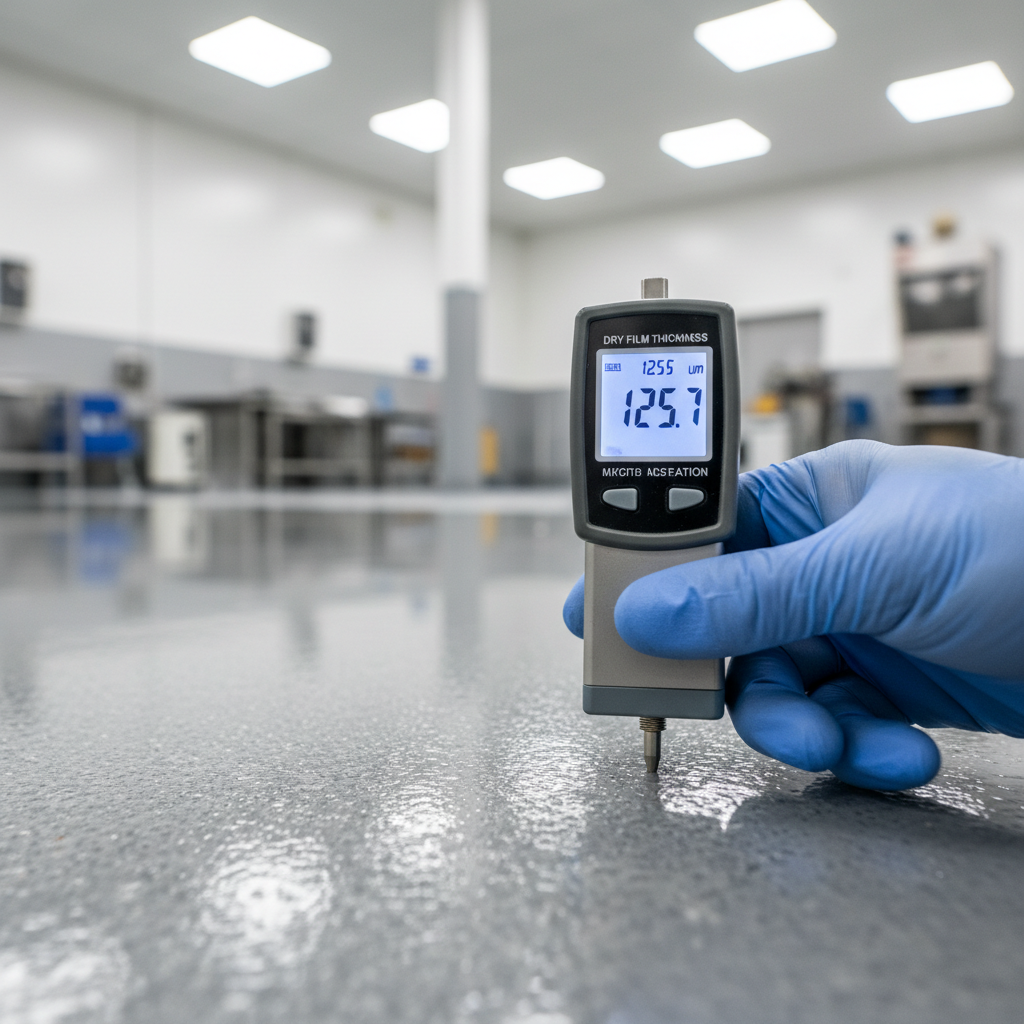
Technician using digital dry film thickness gauge on cured epoxy floor coating, reading visible on digital display
DFT Verification
Elcometer 456 — 47 readings taken
QC Sign-Off Checklist
Adhesion pull-off test (ASTM D4541)
> 300 psi
Average DFT per section
12.4 mil
Holiday (pinhole) test
0 defects
Gloss reading (60° Gardner)
85 GU
Temperature log complete
18 readings
Photo documentation
124 photos
Phase
05
Final Protection & Case Studies

Protect

The sealer coat is the last decision the floor will wear for years. We document every project so the next specifier has a reference, not a guess.

Photo-Documented Case Studies
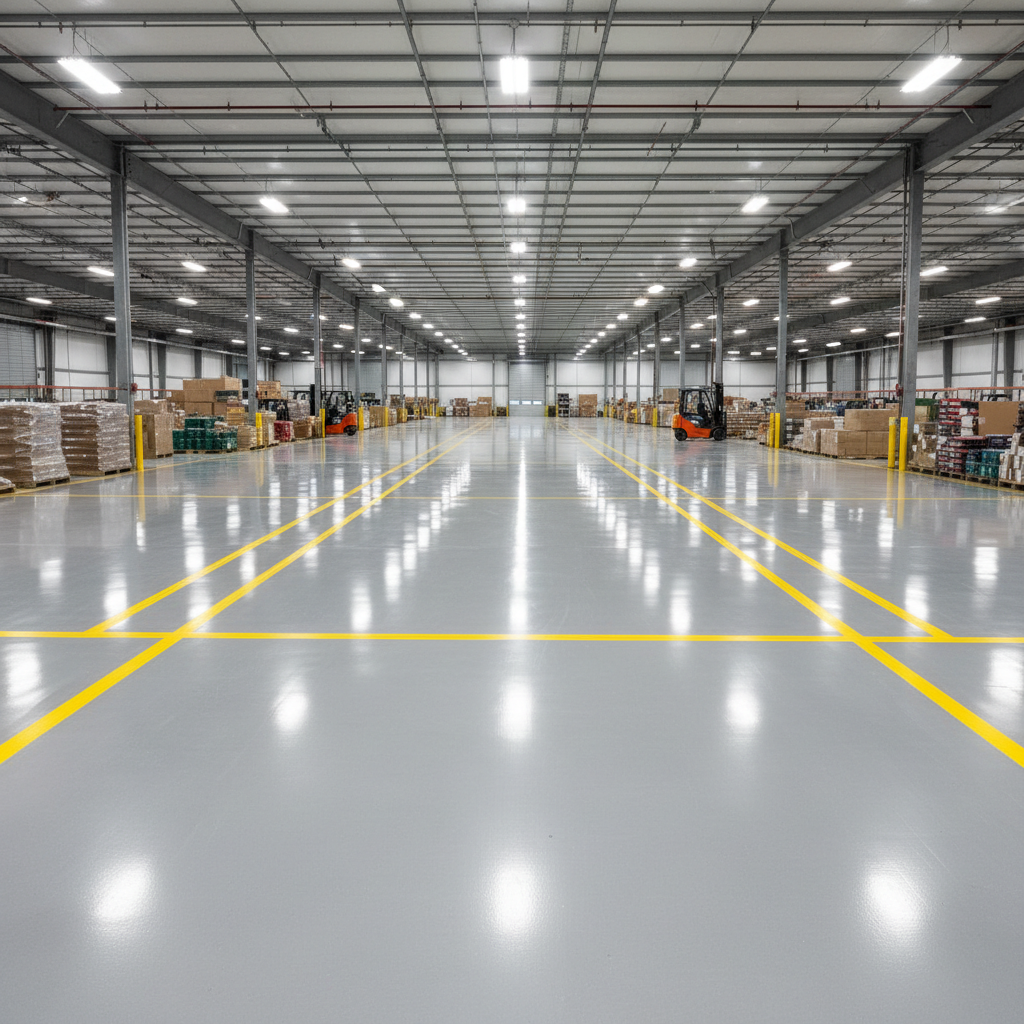
Large warehouse interior with gleaming epoxy-coated concrete floor reflecting overhead industrial lighting, forklift in background
Nov 2024Joliet, IL
Midwest Distribution Hub
220,000 sq ft · Broadcast Epoxy + Urethane Topcoat
Challenge

Existing coating delamination across 40% of floor. MVE readings at 7.2 lbs — above spec for standard epoxy.

Solution

Full removal, moisture vapor barrier (MoistureSeal 500), CSP 4 profile, two-component epoxy broadcast with anti-slip aggregate.

Result

3-year no-defect record. Zero recoat calls.

Sealer System Reference
Penetrating Silane/Siloxane
Exterior, exposed aggregate
Life
5–7 yr
VOC
Low
Acrylic Cure & Seal
New concrete, decorative
Life
1–3 yr
VOC
Med
Epoxy Sealer
Industrial, chemical exposure
Life
3–5 yr
VOC
Low
Polyaspartic
Fast-cure, UV-stable topcoat
Life
5–10 yr
VOC
Low
Spec Sheet Download

The complete spec.
One field to unlock it.

40 pages. Every coating system we install — surface prep requirements, application specs, cure schedules, warranty conditions, and ASTM test methods. Written for the spec table, not the sales floor.

Moisture vapor barrier decision matrix
CSP profile selection guide (ICRI 310.2)
Epoxy, polyaspartic, urethane cement specs
Terrazzo and polished concrete sequences
Cure schedule by temperature and RH
Adhesion pull-off acceptance criteria
Warranty terms by system and substrate
ASTM reference index

No sales calls. Unsubscribe anytime. PDF delivered instantly.